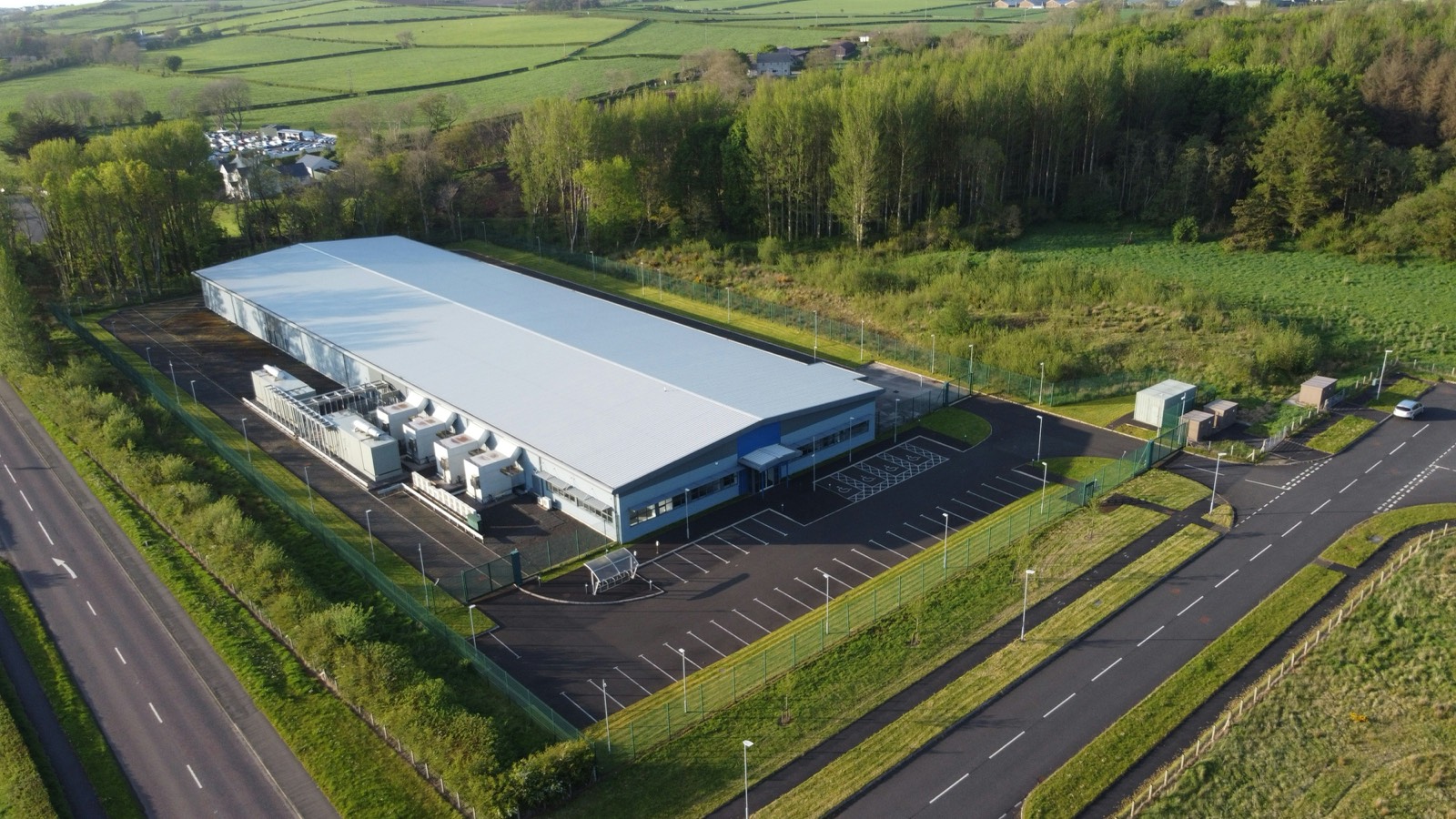
The Next Economy is not a metaphor. It is a specific set of industries: skilled trades, energy, defence, data centres, advanced manufacturing, and healthcare support. It is where the capital is moving, where government is mandating growth, and where the civilian talent pipeline is quietly broken. If you left the forces with an operations, logistics, or technical-infrastructure background, data centres are the clearest way in right now.
Here is the short version. The sector is in the middle of a once-in-a-generation buildout, the civilian workforce cannot staff it fast enough, and people who have run mission-critical kit under pressure are exactly who it is short of. That last group is not a rare breed in the military. It might be you.
Meanwhile, the roles transition advisors love to point at, programme management consultancy, IT project coordination, business operations analysis, are being hollowed out from underneath by AI. The floor is rising in the Next Economy and falling in the one that used to look safe. Worth knowing which side of that line you are standing on.
The Money Landed. The People Didn't.
In September 2024 the UK government classified data centres as Critical National Infrastructure, the same protected tier as energy and water. Translation: the state now treats a server hall like a power station. That is not a press release, it is a signal about where the next decade of investment is protected.
The money followed. A few of the numbers on the table:
- Amazon Web Services: £8 billion committed to UK data centre infrastructure across 2024 to 2028.
- Blackstone: roughly £10 billion for a hyperscale campus at Blyth, Northumberland, on the site of a factory that was never built.
- A queue of hyperscaler and AI-inference projects behind them, all needing the same thing.
Capital builds facilities. Facilities need people to run them, around the clock, under load, at high-availability standards. And this is where the plan quietly falls apart.
Why the Graduates Can't Fill These Seats
The pipeline problem is not an abstract "skills gap". It is a concrete absence of people who have ever kept critical infrastructure alive at operational tempo.
- A computer science graduate is not trained for facilities operations, and mostly does not want to be.
- A facilities management graduate has never touched redundant power, generator failover sequencing, or a zero-downtime shift handover.
- Neither has spent years in an environment where a missed procedure has consequences.
The job wants continuous physical presence, systems-level awareness across power, cooling, and networking at the same time, procedural rigour under pressure, and the ability to hold shift performance at 3am without it sliding. Those are not soft skills you pick up on a two-year graduate scheme. They are operational habits, built slowly, under conditions that enforce them. The military builds them on purpose. A LinkedIn course does not.
Commissioning is the sharpest example. Data centre commissioning needs engineers who can run integrated tests on live infrastructure, marshal several contractor teams at once, and hold zero-tolerance standards on documentation and handover. That exact combination exists in military engineering at scale. It does not come out of civilian construction management in anything like the numbers the market now needs.
The Roles Hiring Now (and What They Pay)
| Role | Level | Typical UK salary |
|---|---|---|
| Data Centre Operations Technician | Entry to mid | £35,000 to £50,000 |
| Infrastructure Reliability Technician | Entry to mid | £38,000 to £58,000 |
| Critical Facilities Engineer | Mid to senior | £55,000 to £80,000 |
| Data Centre Commissioning Engineer | Mid to senior | £60,000 to £85,000 |
| Shift Operations Manager | Senior | £65,000 to £90,000 |
Not a bad ceiling for a sector that will train you the rest of the way and is short enough to fund it.
Your Trade Already Maps
You do not need to reinvent yourself. Most of the translation is one column wide.
| Military background | Data centre role | Why it maps |
|---|---|---|
| Royal Signals (comms infrastructure) | Data Centre Operations Technician | Structured cabling and comms infrastructure translate directly |
| Royal Engineers (power systems) | Critical Facilities Engineer | Generator, UPS and cooling experience maps closely |
| RN Marine Engineer / Petty Officer (ME) | Shift Operations Manager | Watch-keeping discipline, handover protocols, system logs |
| RAF Electrical / Aircraft Technician | Critical Facilities Engineer | Power distribution and fault-finding apply straight across |
| Royal Engineers (HV/LV qualified) | Data Centre Commissioning Engineer | A civilian qualification top-up is usually needed, and employers are funding it |
Why This Sector Survives AI When the "Safe" Ones Don't
Business systems analysts and IT project managers, the roles veterans get steered toward in resettlement, are being compressed by Copilot and workflow automation. The entry-to-mid tier of knowledge-work is consolidating, and headcount is not coming back.
Data centre operations cannot be run from a laptop. The cooling system does not respond to a prompt. The generator failover sequence needs a trained operator on the floor, following a procedure, making real-time calls. The companies building these facilities know this. They are not hiring fewer people to run them, they are hiring more, and they hit the same staffing wall every quarter.
That is the two-economy divergence in its clearest form. One set of jobs is shrinking under AI-driven efficiency. Another is growing because physical infrastructure, at scale, under availability guarantees, still needs humans with operational discipline. Veterans are on the right side of that line, if they walk toward the sector that actually needs them.
The Market Is Not Waiting, and Neither Should You
The employers who get it are not sitting around for a policy launch or a veterans' hiring day. They are rewriting job descriptions, funding civilian qualification top-ups, and building onboarding routes for people with military infrastructure backgrounds. The Uptime Institute's 2024 Global Data Centre Survey named staffing the single biggest operational risk facing operators, ahead of power availability and supply chain. That is structural, not a bad quarter.
The people who move first, with sector-specific preparation rather than general transition optimism, take the best roles before everyone else catches on. The window for first-mover advantage here is measured in months, not years.